IPTV vs cable TV: which is better?
The core difference
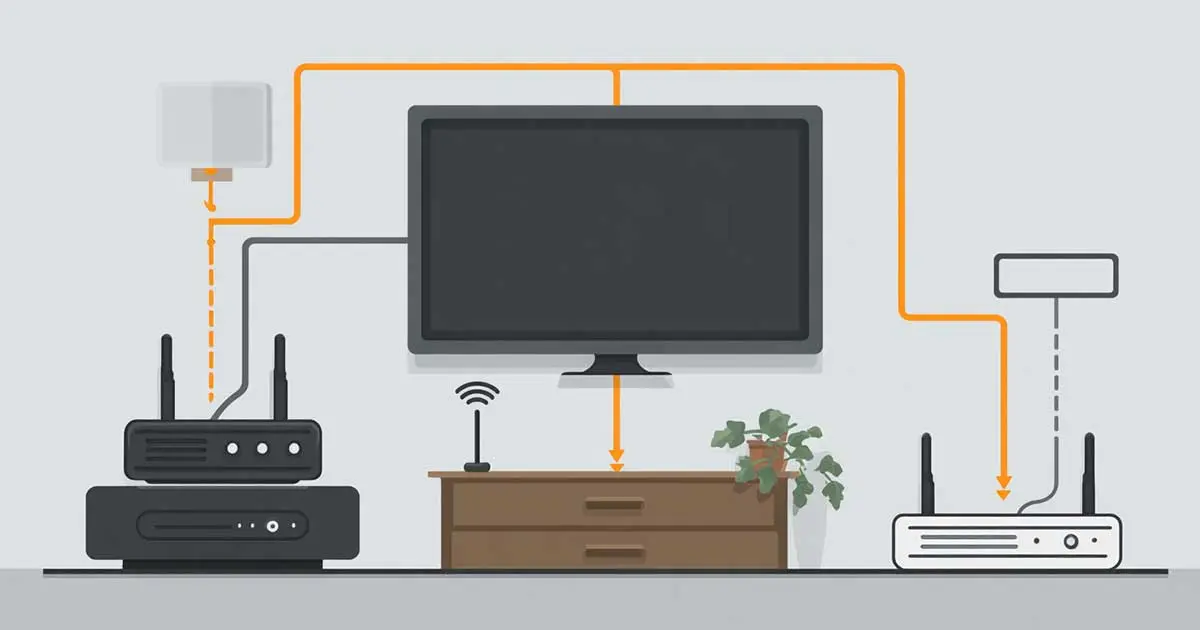
Cable TV sends channels down a dedicated coaxial wire to a box in your living room. IPTV sends the same kind of channels over your internet connection to an app. That single change — wire versus internet — is what drives every difference below, for better and worse. (If the term's new to you, here's what IPTV is.)
Cost
This is the lopsided one. Cable bundles tend to carry equipment rental, a multi-year contract, and a price that creeps up after the introductory period. IPTV is usually a flat fee with nothing to rent.
| Cable TV | IPTV (EightK) | |
|---|---|---|
| Typical commitment | 12–24 month contract | No lock-in |
| Equipment | Box/dish rental | None — use what you own |
| Reference price | Often €30–€50+/month | €12/month or €80/year |
| Try before you buy | Rare | €3 for 48 hours |
Channels & flexibility
Cable gives you a fixed regional bundle. IPTV typically gives you far more, including international channels cable simply doesn't carry — EightK lists 17,000 channels across 82 countries plus 87,000+ on-demand titles. You also watch on any device, anywhere, rather than only on the box in the room with the cable socket. For a household with people from more than one country, that breadth is the whole point.
Equipment & setup
Cable means a box, often a dish, and frequently an engineer appointment. IPTV means installing an app on a device you already own and entering a login — about ten minutes, no one visiting your home. If your TV is older, a cheap Fire Stick covers it; we walk through that in how to set up IPTV on a Firestick.
Reliability
Here's where I'll be straight, because it's the one area cable genuinely wins. A dedicated cable doesn't share your internet, so it doesn't care how busy your line is. IPTV rides on your connection, which means a slow or congested line — or a provider with distant, overloaded servers — can buffer.
Cable's reliability is its real advantage. IPTV closes the gap with a good connection and nearby, high-capacity servers — but it doesn't pretend the gap isn't there.
That's exactly why EightK runs on German-based servers sized for peak load, and why we tell you to test for buffering before committing. With a solid connection, the reliability difference is small. With a weak one, cable still wins.
Who should keep cable
Honest advice, even though it costs us a sale: if your home internet is genuinely unreliable or can't hold around 25 Mbps, keep cable — IPTV will only frustrate you. And if you watch a tiny, fixed set of channels and hate change, cable's set-and-forget simplicity has real value.
For everyone else — most cord-cutters — IPTV is cheaper, broader and more flexible. The sensible way to switch is to run both for a month: keep cable, test IPTV with the €3 trial during a busy match, and only cancel once it's proven itself. Don't burn the bridge first.
Frequently asked questions
Is IPTV cheaper than cable TV?
Almost always. Cable usually adds equipment rental and a contract. As a reference, EightK is €12/month or €80/year for one connection, with nothing to rent.
Is cable more reliable than IPTV?
On raw reliability, yes — a dedicated wire isn't affected by your internet. IPTV depends on your connection and the provider's servers, which is why both matter.
Can IPTV replace cable completely?
For most people, yes — live channels and on-demand in one app. The exception is an unreliable internet connection, where cable's dedicated line is safer.
Do I need new equipment to switch?
Usually not — IPTV runs on a Smart TV, Fire Stick or phone you already own. No dish, no box rental, no engineer.
Does IPTV have the same channels as cable?
Often more, including international channels cable doesn't carry. EightK lists 17,000 channels across 82 countries.
How do I try IPTV before cancelling cable?
Run them together for a month. Test EightK's €3 48-hour trial during a busy match; cancel cable only once IPTV proves itself.